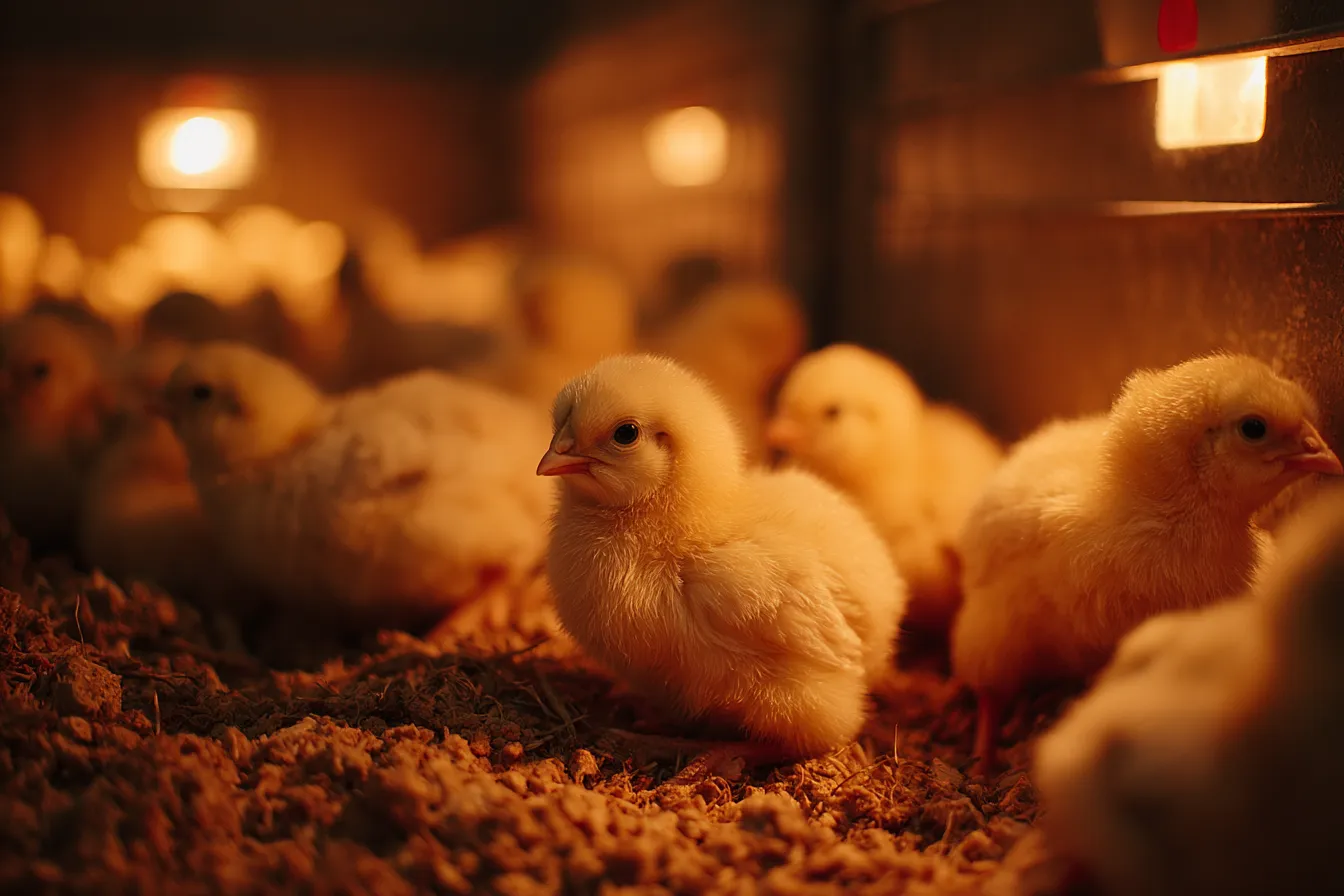
A flock is very often won or lost in its first three days, long before anyone is worried about it. By the time the numbers look bad, the cause is a week behind you.
Day-old chicks cannot regulate their own temperature and are living off the yolk and the first feed. The brooding window is when the gut develops, appetite is set and the frame for the whole cycle is laid down. Get these three days right and the flock forgives a lot later; get them wrong and no amount of later management fully recovers it.
Crop fill is the first honest number
A few hours after placement, check crops. A full, soft crop means the chick has found feed and water and is eating; an empty or hard crop means it has not. Sample across the house and aim for the large majority of crops full within the first hours. Low crop fill early is the single best warning you will get, and it costs nothing to take.
Temperature at the chick, not on the wall
Chicks show you the temperature by how they sit. Spread evenly and active is right. Huddled together is cold. Panting and pushed to the edges is hot. Bunched to one side is a draft. Floor temperature matters as much as air temperature at this age, because a chick spends its time on the litter, so pre-heat the house and the floor properly before the birds arrive, not just the air.
By the time the close-out sheet looks wrong, the first 72 hours were already over. That is where the flock was decided.
Water, feed and light in the first day
Easy access to clean water and feed, close to the chicks, with light bright enough and long enough to keep them finding it. Chicks will not travel far in the first days, so the resources have to come to them. A drinker line set too high or a dim house in the first 24 hours quietly starves part of the flock before it ever gets going.
Watch the first three days the way you would watch a breaking flock, because that is what they are: a flock deciding which way it will go. The checks are simple, crop fill, chick behaviour, water, feed and heat, and the farms that hold them see it in every close-out.