Insights / Vaccination
Why vaccines fail in the field, and it's almost never the product
A vaccine that arrives in perfect condition and is given on the right day can still do nothing, because the failure usually happens in the hour before it reaches the bird, not in the vial.
Across twenty-five years of controlled-shed programmes, the pattern is consistent. When a vaccination doesn't take, the product is rarely at fault. Four handling failures account for almost all of it, and every one of them is fixable on the farm, for free.
1. The cold chain breaks quietly
Live vaccines are living organisms. A cool-box left in the sun on the way from the distributor, or a fridge that swings warm overnight, kills enough of the dose that the bird sees a fraction of what the label promises. The break is invisible, the vial looks identical, which is exactly why it is missed.
Most vaccine failure is a handling failure. The product did its job; the hour before it reached the bird did not.
2. Reconstitution is rushed
Chlorinated water inactivates live vaccine. Mixing in a dirty tank, using town water without a neutraliser, or letting the reconstituted vaccine stand too long before it's given all cut the effective dose. The fix is a clean tank, the right water, and a clock.
3. Timing ignores maternal antibody
This is the one that costs most. Maternal antibodies protect the chick early and neutralise live vaccine at the same time. Give it too early and the antibody mops it up; too late and field challenge arrives first. The right day is set by titre, and titre is local, which is why a schedule copied from another farm so often disappoints.
4. Route and coverage are uneven
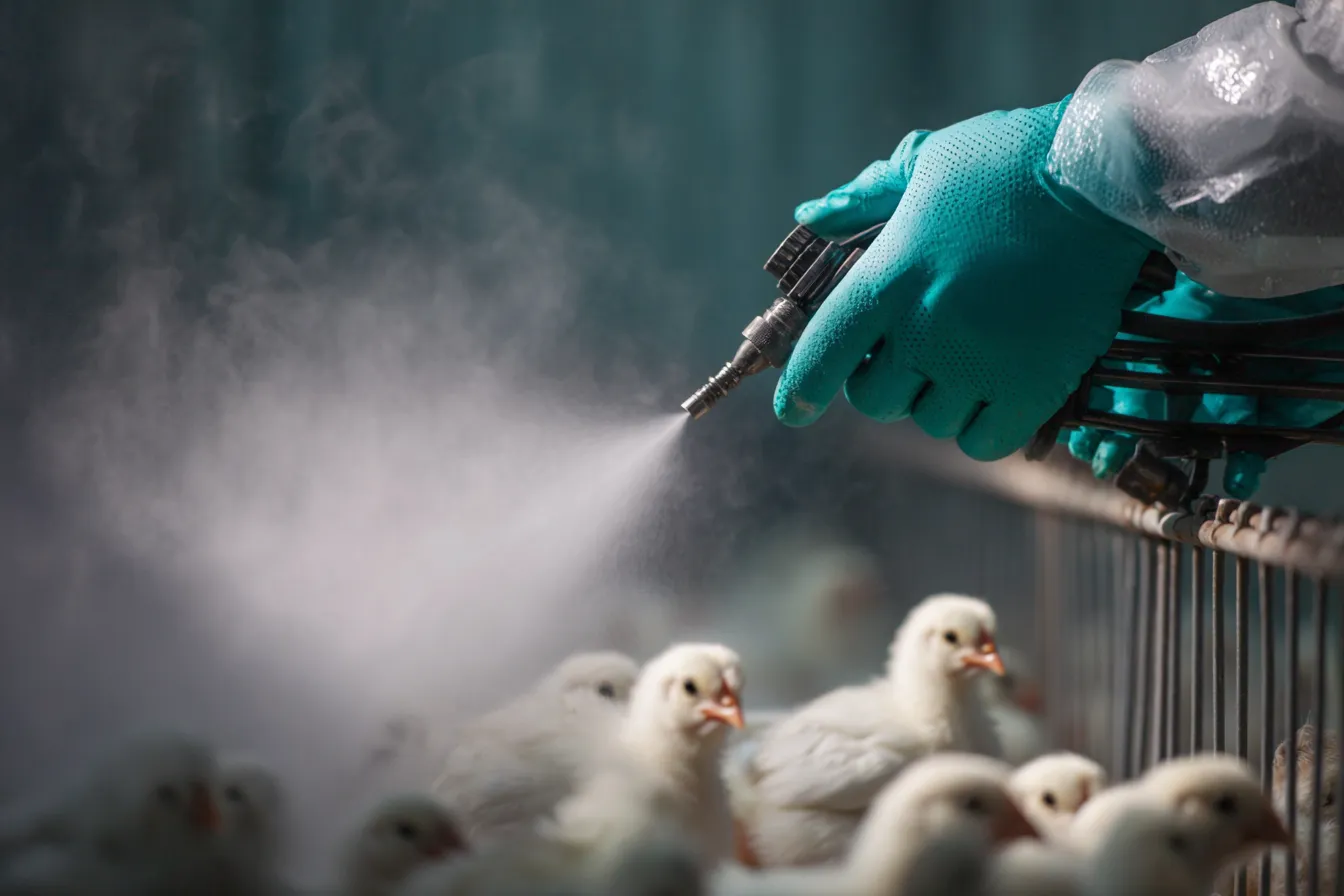
Spray droplets too fine or too coarse, drinker lines that starve the far end of the shed, birds that don't drink in the window, all leave part of the flock unprotected. Uniform coverage is a technique, not an assumption.
Get these four right and most “vaccine problems” disappear without changing the product at all. If flocks keep breaking through a programme that looks correct on paper, the answer is almost always in the handling, and that is worth a conversation.